Why Is My Sofa Sagging? (And Can It Be Fixed?)

Why Is My Sofa Sagging? (And Can It Be Fixed?)
If the title of this article: "why is my sofa sagging?" got your attention, you are probably experiencing one of the most common problems homeowners experience. A sagging sofa is common, particularly with well-loved furniture that's been used every day for many years.
What we're going to share in this article will show you that a sagging sofa doesn't necessarily mean it's reached the end of its life. In fact, in many cases, the issue can be repaired without replacing the entire sofa. But there is, of course, nuance to this.
Whether your cushions have lost their shape, the seat no longer feels supportive or the fabric has started to look tired, identifying the cause is the first step towards finding the fix.
In this guide, we'll explain the most common reasons sofas sag, how to tell what's causing the problem, and whether refurbishment, replacement covers or reupholstery could help restore your furniture.
What Causes a Sofa to Sag?
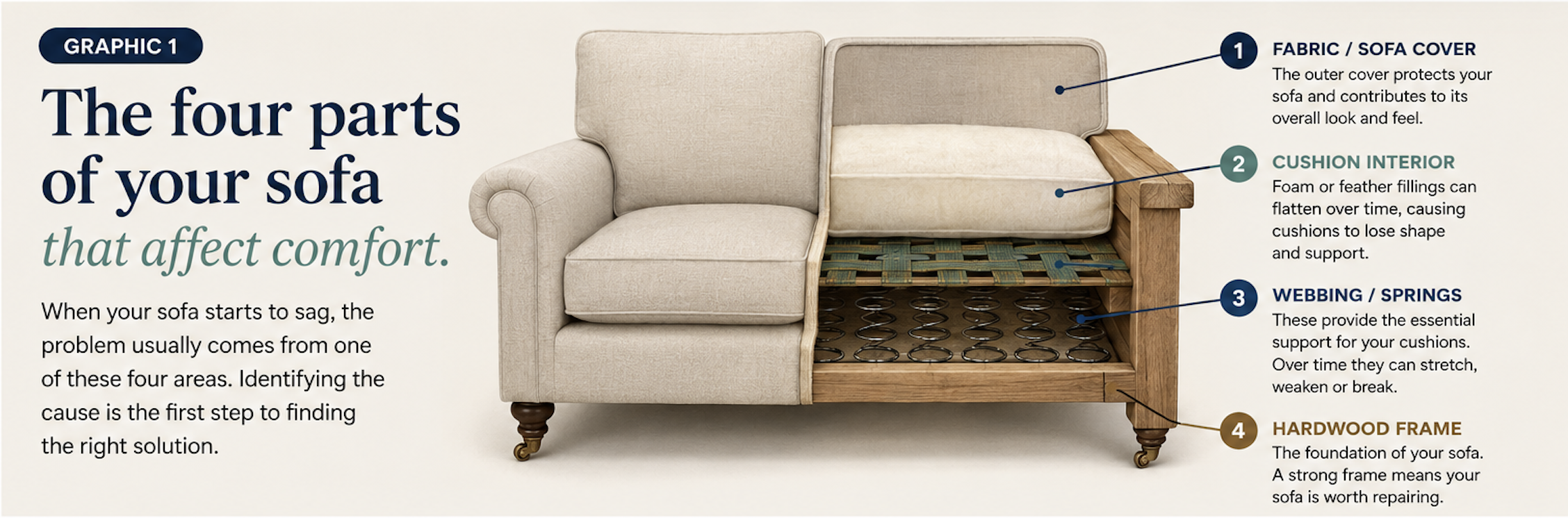
There isn't one single cause of a sagging sofa. The sofa is a heavily used item of furniture, and sagging is usually just a result of wear and tear. However, which part of the sofa is actually sagging can massively change what solution you choose to fix it!
1. Flattened or Worn Sofa Cushions
The most common culprit actually isn't the sofa itself, it's the cushions.
Over time, foam naturally softens and feather fillings become compressed through everyday use. This leaves cushions looking flat, feeling less supportive and making the entire sofa appear worn out.
Signs this is the issue:
-
The frame still feels sturdy.
-
The seat (underneath the cushions) looks uneven or deflated.
-
Fluffing the cushions only helps for a short time.
-
The sofa feels less comfortable than it used to.
If this sounds familiar, replacing the cushion interiors may be all that's needed to restore both comfort and appearance.
2. Stretched Webbing or Worn Springs
If the cushions are still in good condition but the seat feels like it's sinking, the support beneath them may be the problem.
Many sofas use elastic webbing or springs to support the seat. After years of regular use, these components can weaken or stretch, causing the sofa to sag even when the cushions are removed.
Signs this is the issue:
-
The seat feels low even without the cushions.
-
One seat sags more than the others.
-
You can feel the frame more easily when sitting down.
-
The sofa has lost its supportive feel.
This type of problem can often be resolved through professional sofa refurbishment, helping to restore both comfort and support without replacing the entire piece.
3. Worn or Loose Upholstery
Sometimes the problem is cosmetic rather than structural.
Fabric naturally relaxes over time and may begin to wrinkle, stretch or lose its tailored appearance. While this doesn't always affect how the sofa feels, it can make it look much older than it really is.
If the frame and cushions are still in excellent condition, replacing the upholstery or fitted sofa covers can completely transform its appearance for a fraction of the cost of buying new.
4. Damage to the Sofa Frame
A damaged frame is actually one of the least common causes of a sagging sofa, especially if you own a high-quality piece of furniture.
Many older sofas, particularly Multiyork models, were built with solid hardwood frames designed to last for decades.
If your sofa rocks, creaks excessively or feels unstable, it's worth having it professionally assessed before deciding whether it needs replacing. Often, the frame is still perfectly sound, and another component is causing the issue.
Can a Sagging Sofa Be Fixed?
In many cases, yes.
One of the biggest misconceptions is that a sagging sofa automatically needs replacing. More often than not, only one element has worn over time, while the rest of the furniture remains in excellent condition.
Depending on the cause, a sagging sofa can often be fixed by:
-
Replacing worn cushion interiors.
-
Repairing or replacing webbing and springs.
-
Reupholstering the sofa.
-
Replacing worn or faded sofa covers.
Identifying the cause first means you only pay for the work that's genuinely needed.
Should You Repair Your Sofa or Buy a New One?
Before investing in a brand-new sofa, ask yourself these questions:
-
Is the frame still solid?
-
Does the sofa still fit your room perfectly?
- Do you love the sofa?
- Was it an investment piece?
If the answer to most of these is yes, repairing your existing furniture could save you a significant amount of money while extending its lifespan for many more years.
It's also the more sustainable choice, keeping quality furniture out of landfill and making the most of a piece that's already proven its durability.
Why Quality Sofas Are Worth Repairing
Not all sofas are created equal.
Many older sofas were built using high-quality hardwood frames and traditional construction methods that simply aren't found in many modern mass-produced alternatives.
This is particularly true of Multiyork furniture, which has earned a reputation for exceptional craftsmanship and longevity.
If you own a quality sofa, replacing the covers or investing in professional refurbishment is often far better value than replacing it with a lower-quality alternative.
How My Sofa Covers Can Help
At My Sofa Covers, we specialise in giving quality furniture a second life.
Depending on what's causing your sofa to sag, we can help with:
-
Replacement Multiyork sofa covers, expertly made to fit your existing furniture and refresh its appearance.
- Replacement cushion interiors, to get the seat feeling comfy and supporting again.
-
Professional sofa refurbishment and reupholstery, restoring comfort, support and style.
-
Made-to-measure curtains, perfect for completing your living room makeover with beautifully coordinated furnishings.
If you are unsure, our experienced team will recommend the most appropriate option for your furniture, helping you make the most of a sofa you already know and love.
Final Thoughts
A sagging sofa doesn't automatically mean it's time to buy a new one.
Whether the problem is tired cushions, stretched support, worn upholstery or simply years of everyday use, many issues can be repaired quickly and cost-effectively.
Understanding why your sofa is sagging is the first step towards finding the right solution. With the right repairs or replacement covers, your favourite sofa could continue looking and feeling its best for many years to come.
Frequently Asked Questions
How do I know if my sofa can be repaired?
If the frame is still solid, there's a very good chance it can be repaired. Most sagging is caused by worn cushions, webbing, springs or upholstery rather than structural damage.
Is it cheaper to repair a sagging sofa?
In many cases, yes. Repairing or refurbishing a quality sofa is often significantly more cost-effective than replacing it with a comparable new model.
Can replacement sofa covers fix a sagging sofa?
Replacement covers won't fix structural sagging, but they can dramatically improve the appearance of a sofa once any underlying issues have been repaired. If your existing covers are faded, stretched or worn, new fitted covers can make the sofa look like new again.